Showing posts with label Liquor Reviews. Show all posts

Wednesday, April 01, 2009

My New Favorite : Red Stag

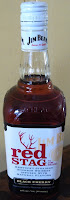
Ok, all your whiskey snobs out there, get ready to sneer, scoff and fall down in convulsions… yes, there is a flavor-infused bourbon on the market. Black cherry, in fact. It is called Red Stag by Jim Beam. And, I'm diggin' it.

Excuse me while I get a bit sexist on you for a minute… but I have to say that the marketing is quite clever with this one. The label smacks of masculine pastimes: A pair of red antlers (as if they’ve just be carved of some poor buck’s head), bold lettering, no pretty pictures of animals or fruits. The bottle looks true to the Southern Good Old Boys’ bourbon, made at Jim Beam. However, the luscious black cherry-infused, slightly candy-esque elixir might be strong enough for a man (at 80 proof) but it is oh-so made for a woman. If there are any ladies out there who are still too intimidated to cross over to the “dark” side and try the brown spirits, this is your gateway drug.

Red Stag is a no-brainer option for Manhattans and Muddled Old Fashioneds. (Yes, rye-lovers, I said it. Black cherry bourbon in your drink. Open your minds.) Its flavor profile also opens up a million avenues for new bourbon cocktails, considering its high mixability factor. I, personally, cannot wait to start serving some of my new concoctions to friends. Oh screw the friends, I’m making one for myself, this afternoon. Why wait?

The name is a tribute to the red stag elk who were hunted to extinction in the wilds of Kentucky (and surrounding areas) over the last two centuries. However, in 1997 conservationists (otherwise known in the South as freedom-hating liberals from the North) re-introduced the native mammals to the region. The Jim Beam company pays homage to the majestic animal with their fine, new product.

Fight me to the end, whiskey purists everywhere, but I’m giving Red Stag black cherry-infused bourbon 'thumbs up.'

Friday, January 30, 2009

Twinkle Twinkle Little Spud

They say not to judge a book by its cover. So, is it fair to judge a person by their astrological sign? Are Leos really more egotistical? Will a Scorpio lover love you and leave you after an amazing roll in the hay? Are Geminis two-faced? The next time you ponder the stars, or their influence on the people in your life, why not do it over drinks… made with Zodiac Vodka, for example?

Made from Idaho potatoes, and distilled in-state, Zodiac is only one of a few potato vodkas made in the U.S. This makes a great gift for someone who reads her daily horoscope (or refuses to walk under ladders) because you can choose the bottle which correlates to each sign. (While we’re talking about astrology, don’t forget to check out my pal Gwen Kaiser’s website “Intoxicated Zodiac.” She has a whole slew of cool “star” studded gifts for the cocktail lover.)

If you’re not into all this mumbo-jumbo, you don’t have be a potato head and ruin it for the rest of us believers. We Aquarians, for example, are open minded enough to love you anyway, and maybe even mix you up a vodka cocktail to prove it.

Sunday, December 28, 2008

Its Not Too Late for Nogtails!

Didn’t get your fill of eggnog this holiday season? Never fear! These two delicious egg nog cocktails (which I’ve coined “nogtails”) come to us from Mixologist Chris Hannah at the legendary French 75 Bar at Arnaud's restaurant in New Orleans.

These contemporary versions of traditional eggnog recipes use one of my favorite new Spanish brandies Gran Duque de Alba Solera Gran Reserva, from Jerez, the only AOC for brandy in Spain. This brandy is rich and nutty, layered with spice and aged for 12 years in oak casks. It has a long finish and warms the body from inside, out. Gran Duque has won gold medals from both the San Francisco International Spirits Competition and the Beverage Tasting Institute’s International Reivew of Spirits.

Spanish Nog
1/2 ounce Gran Duque de Alba
1/2 ounce Dry Sack sherry
1 whole fresh egg, beatn
1/2 ounce simple syrup
1 ounce Half and Half
1 ounce heavy whipping cream
1/2 teaspoon ground nutmeg

Shake ingredients in cocktail shaker filled with ice. Strain over ice in an old fashioned glass. Top with ground nutmeg.

Velvet Egg Nog
1/2 ounce Gran Duque de Alba
1 ounce Peppermint Schnapps
1 ounce Frangelico
1 whole fresh egg, beaten
1/2 ounce simple syrup
1 ounce Half and Half
1 ounce heavy whipping cream
Dash of nutmeg

Combine ingredients over ice in a rocks glass. Top with ground nutmeg.

Wednesday, December 17, 2008

Little Souse on the Prairie

Remember the TV show “Little House on the Prairie?” They raised their own food, there were no chemical or artificial colorings or flavorings. Everything was organic because it came straight from nature. With today’s renewed interest in living a healthy life ‘close to the earth’ we seek out organic, seasonal food – so why wouldn’t we do the same with our cocktails?

Prairie vodka is distilled from organic #2 yellow corn, and over 900 Minnesota farmers are stakeholders in the brand. In addition to all that home-grown goodness, it is certified both organic and kosher.

What does it mean to be “organic”? In order for a spirit to be deemed “certified organic” by the USDA (United States Department of Agriculture) the entire process, from the growing of the grains to bottling must be free of chemical pesticides, herbicides, genetically modified seeds and artificial fertilizers or enzymes.

What does it mean to be “kosher”? Being kosher means that the sources of all ingredients in a spirit are documented and approved, and that the distillation and bottling facilities are clean and hygienic, and all equipment has been properly sterilized prior to the production of each batch of vodka. This ensures that everything from the ingredients to distillation to bottling meets kosher standards for purity and cleanliness.

The flavor is smooth as corn silk with hints of summer and fall fruits such as cantaloupe and pear. Prairie also received a Gold Medal Spirit Award at the 2008 Los Angeles International Wine & Spirit Awards.

Without actually going to the distillery to witness this for myself, I’m relying on the press release with came with the sample for this information: “Leftover corncobs are converted on-site to biogas energy for powering the stills. In addition, the Distillers Dried Grains with Solubles (DDGS), a co-product of distillation, is returned to farms for reuse as feed. Prairie is packaged in an unfrosted, recyclable glass bottle, packed in a cardboard box produced from sustainable forest wood pulp, employs organic inks on its paper labels and, since it is crafted many thousands of miles closer to home than imported brands, requires significantly less petroleum to bring to market.”

The September 2007 harvest yielded enough corn to craft approximately 29,000 cases. And, the nice thing about not actually living in the little house on the prairie is that we can simply drink the vodka and leave the growing, fermenting and distilling to the people who do it for a living.

Saturday, November 15, 2008

Kissed With Cachaca Cocktails at Beso

I’ve been a fan of the food-and-cocktail pairings for a while. I love me some yummy food and I love me some yummy cocktails. A long-time resident of Los Angeles, I also love our yummy, celebrity-ridden, see-and-be-seen restaurants and bars. Roll these all
together into one evening and I’m sipping my way into Pop-Culture Paradise.

Needless to say, when Cabana Cachaca invited me to sample cocktails by Alex Straus – L.A. barman extraordinaire – paired with Latin-inspired delicacies designed by Executive Chef Todd English at Beso, co-owned with “Desperate Housewives” Eva Longoria Parker and one of the hottest hotspots in the ‘Hollyhood,’ I was excited!

Now, sometimes the places with all the hype in L.A. are style-without-substance. I admit a bit of skepticism as I wound my way over Laurel Canyon and onto Hollywood Boulevard. As the valet drove off with my car, and I stepped in
to the softly lit red-and-black eatery peppered with pretty people and dripping with enormous crystal chandeliers, I prepared my ‘mental notebook’ and switched on my bullshit meter.

Of course, I should have known that when Anthony Dias Blue is involved, its impossible to be disappointed. The charming Editor-In-Chief of The Tasting Panel Magazine knows his food, wine and spirits. Formerly an Editor at Bon Apetit with a James Beard award under his belt, he also knows a thing about restaurants.

Matti Anttila, founder of Cabana Cachaca hosted the evening in conjunction with Andy, and I got to learn a bit about Cabana. The company is only a few years old but already recognized as makers of one of the finest cachacas on the market and produced outside Rio by a Brazlian Master Distiller. (Fyi: the finals in their cocktail competition is coming up in Brazil. Stay tuned for more on that, at a later date.) In my experience, I’ve found Cabana to be a light, clean distillate, which mixes well in cocktails and is also nice with just a squeeze of lime and pinch of sugar, ie: my Soft Core Caipirinha.

For my meal, I selected the CraBLTA Tacos, a sexy little concoction of crab, mango, avocado and bacon, served in a house-made, deep fried taco shell. Uh huh. Decadent. Even more so when paired with Alex’s Cabana Cilantro Collins:

2 oz Cabana Cachaca
2 pinches cilantro

3 lemon wedges

3/4 oz. simple syrup

Shake, strain over fresh ice. Top with soda water.

Next I cheated and shared with the person seated next to me… I got the Chili-Rubbed Skirt Steak and she got the Jumbo Sea Scallops with tomatillo risotto, mulatto mole and mojito pesto. This course was paired with Poolside Punch:

1 3/4 oz. Cabana Cachaca
6 red grapes
1 ounce white wine

1 ounce fresh sour

Serve on the rocks.


Finally, for dessert, I chose the Hazelnut Flan served with malted milk sorbet, sour cherry marmalade and salted popcorn. Yeah, I know… yum. This sweet / sour / salty flavor extravaganza was lacking only one element… spicy… which came in the form of the Serrano Caiprinha:

2 oz. Cabana Cachaca
4 lime wedges

3/4 oz. simple syrup

3 slices Serrano chili
Muddle, serve on the rocks.


When you make it into Beso, be sure to belly up to Alex’s bar. Tell him I sent you and ask for one of these specialty drinks. Trust me when I tell you that you will like them so much, you’ll want to plant a big fat sloppy beso on him.

*Big thank you to fellow scribe and girl-about-town, Karen Loftus, who once again generously shared her photos when I (like a dolt!) forgot my camera. She is pictured above with Matti.

Monday, November 10, 2008

The Bitter Truth

Without It, You’re Not Drinking A Cocktail

In the U.S., we use the term “cocktail” the way we use “champagne" - a blanket term and not always accurate. Most of the cocktail menus we see in our favorite lounges and bars are not necessarily made up of true “cocktails.” They may be smashes or punches or crustas or daisies or other classifications of mixed drinks. What the hell am I talking about, you ask? Well, let’s begin with the definition of a cocktail:

Cocktail = Spirit + Water + Sugar + Bitters
  • Spirit: alcohol of some kind (vodka, gin, whiskey, rum, and so on)
  • Water: can be actual water or soda water, or sometimes comes in the form of ice
  • Sugar: can be granulated sugar, simple syrup, or even a sweet liqueur
  • Bitters: can be Angostura (found at any supermarket), can also be flavored bitters such as Fee’s new rhubarb, grapefruit, peach, etc. Can be traditional Peychaud’s bitters, as used in the classic “Sazerac” cocktail, Can also be a bitter apertif / digestif such as Averna, Campari, Fernet Branca, etc.
There is so much room for creativity when it comes to designing a new cocktail, just as there is creating a special meal, or painting, or designing the latest ditty to drape over a model on the catwalk. This creative factor is exactly what attracts so many of us “artsy types” behind the bar.

I can wax poetic about my love of Campari, and go on about the myriad of novelties with using flavored bitters. However, in this post, I want to share a bit about the “elite” bartender’s darling, that little Italian bitter sweetheart called Fernet Branca.

Fernet Branca, is similar to vermouth in the sense that it is wine-based. Like mainstay bitters such as Angostura, it is infused with herbs and spices (more than 40, actually). Some of those include: peppermint, myrrh, chamomile, cardamom and saffron. It is aged in oak barrels for a year. And more than 2 million cases of this stuff is sold annually, worldwide.

So, why hasn’t every American embraced Fernet Branca, and other bitter apertifs / digestifs? My theory is that the U.S. palate is more accustomed to sweet than bitter. We grew up with Kool Aid and Coca-Cola as childhood beverages. Most of us girls, anyway, first encountered alcohol in the form of sickly sweet wine coolers and fruity, sugary cocktails designed more for their color and foofy names, than for what was in the glass. Even our early champagne was likely some form of Asti Spumante – a sweet, carbon dioxide injected sparkling wine.

Whereas in Europe, the concept of aperitif (appetite opener) and digestif (digestion facilitator), in the form of a tidy beverage, is simply part of the meal. I grew up spending annual chunks of time in France where it was natural for a teenager to be exposed to Campari and soda, or Dubonnet with a lemon twist, or a glass of sweet red vermouth on ice, for example.

Fernet Branca is particularly pungent, and even for a bitter lover like myself, I can see how it resembles cough syrup at first sip. After all, herbal elixirs were early medicine. And, Fernet Branca was created in 1845 by Bernadino Branca, a self-taught alchemist in Milano, Italy. His three sons, Giuseppe, Luigi and Stefano carried on the family business after his death.

Fernet Branca is still a family-run business to this day. It sells in the U.S. for just under $30 per bottle. And, if you frequent high-end drinking establishments in our major cities (and hopefully some smaller ones) you will see it behind the bar. If you are a cocktail enthusiast looking to round out your home bar, run out and get yourself a bottle, and start experimenting. After all, a cocktail by any other name may taste as sweet… but that may be exactly NOT what the doctor ordered!

Tuesday, November 04, 2008

Bols Genever

A Stroll Down Modern Mixology’s Memory Lane


Many associate gin with the English. And, rightfully so, as they drank so much of it that the “Gin Craze” of the 1700’s became a national crisis – men, women and children were raging alcoholics! The British Navy also put gin on ships and took it to India where they guzzled it down with quinine to avoid malaria and sometimes a squeeze of lime to stave off scurvy, in the form of a drink we call the Gin & Tonic.

However, if we roll back our history clocks a few centuries, we will see that the English actually first came to gin via the Dutch. Also a world power, at the time, fighters in the Dutch military drank grain spirit infused with herbal botan
icals as liquid courage (and lets face it, drinking distilled spirits meant one had less of a chance from dying due to drinking dirty water. This was before water purification systems were in place, and water-bourn diseases took many-a-soul.)

The Dutch gin was called genever, and it has been produced in Holland since the 1500’s. Many of our original classic cocktail recipes were actually created with genever. Now, Lucas Bols is making genever available to all of us around the globe. Yippee!

The heart of a true genever is maltwine, a distinctive distillate made by triple distilling a mash of rye, corn and wheat in copper pot stills at 47%, which is believed to be the optimum alcohol content for maximum flavor. Genever has even been awarded the prestigious A.O.C. status, meaning that this spirit can only be produced in Holland. Bols has even designed a traditional bottle, as seen in the photo above. Drinking this product is like taking a little sip history.

This stuff is freakin’ delicious. Smooth, herby, silky, strong. It is amazing in cocktails and seriously incredible chilled, up, with a twist of lemon and a splash of simple syrup and orange flower water stirred in. Add a thimbleful of dry (or even sweet) vermouth – and it’s the martini I hope to drink in Heaven.

Here are a couple of recipes from the Bols Genever camp:

The Holland House
1 3/4 ounces Bols Genever
3/4 ounce Noilly Prat dry vermouth
1/2 ounce freshly squeezed lemon juice
1/4 ounce maraschino liqueur

Shake, with large cubes of ice. Double-strain into a chilled cocktail glass. Stray and rim glass with lemon zest.


The Improved Holland Gin Cock-Tail
2 ounces Bols Genever
3 dashes rich sugar syrup (2 parts sugar / 1 part water)

2 dashes orange bitters

1 dash dry orange curacao


Stir, with large cubes of ice. Strain into chilled cocktail glass. Spray and rim glass with lemon twirl, dropping it into the drink, afterwards.

Monday, November 03, 2008

Take A Look Around 360 Vodka

The Girls Next Door Did…

Eco-friendly 360 Vodka hit the Playboy Mansion for the “Great American Fantasty” party, last month. The event raised money for the 30th anniversary of the Children of the Night charity, a non-profit organization dedicated to rescuing children from the streets. As you can see the girls gave Vic Morrison (360’s VP of Marketing) plenty to fantasize about while Ludacris performed for party-goers.

But 360 vodka is more than flashbulbs and Hollywood snapshots. All of the grains - corn, wheat and milo - used to make the vodka come from
northeastern Kansas and southwestern Missouri, within a 95-mile radius of 360’distillery. Although the grains are not organic, McCormick Distilling (the company behind 360) is minimizing its eco-footprint by working with local farmers, minimizing fossil fuel emissions and lowering its energy consumption. By partnering with Renewable Choice Energy, McCormick offsets 100% of the electricity and natural gases used at their Weston, MO facility, where all of their products are made.

Each batch of 360 Vodka is filtered through their proprietary charcoal and Sri Lankan coconut shell filter system and column distilled four times. And, if that is what makes it so smooth and creamy, all the better. It is clean, pleasant, and frankly, delicious. At 80 proof, it is great for mixing or chilling and drinking straight. Added bonus: the bottle is made from 85% recycled glass.

360 New Leaf
(This recipe is essentially a vodka mojito - easy to make and refreshing for a steamy, sexy party.)
4 Lime Wedges Squeezed & Dropped
6 mint leaves torn in half
1 oz. Simple Syrup
2 oz 360 Vodka

Muddle limes, mint and simple syrup. Add vodka, fill with ice, then top with club soda or lemon lime soda.

Tuesday, October 07, 2008

Passionate for Skyy

Yes, you read that correctly. Skyy Infusion's new passion fruit flavor is delicious. I know, some of you out there may roll your eyes and scoff. It’s VODKA! It’s FLAVORED! (all natural" at that) But, I’ll tell you what… it tastes good.

I just made my version of the Passion Fruit Cosmo – oh yeah, even a Cosmo avoider like myself. Replace the citrus vodka with Skyy’s passion fruit vodka, replace the cranberry juice with guava juice, and let me tell you people, it tastes fab-u-lous.

I was not so fond of the AperiTea pre-bottled cocktails mixers I received in the same package. Went right into the garbage. But, that’s not surprising. I’m not a pre-mixed cocktail mixer kind of gal.

The Mighty Leaf organic tea bags were lovely though. I will buy boxes of Spring Jasmine and African Nectar. I might even mix them with the Skyy. I have been known to whip up a tea-ni or two. Those are yummy. You know I would lie to a passionate little flower like you.


Does Your Tequila Have a Master?

Yes, I’m a little partial to tequila, these days, so trying new brands gets me all excited! Maestro Dobel is one of those that I will enjoy slowly, and only with people who will enjoy it as much as I do.

Blended from reposado, anejo and extra anejo tequilas, which are made from 100% 8-10 year old blue agave plants, Maetro Dobel calls itself a diamond tequila. I suppose that is meant to be a higher classification than the plantino (or platinum) tequila I tried a few months ago… although that was quite tasty, too.

Each bottle of Maestro Dobel is hand-numbered, has the bottling date on it and is signed by the Master Distiller Juan-Domingo “Dobel” Beckmann, the sixth-generation leader of the world’s most prominent tequila-producing family. Pretty impressive stuff. And, with a suggested retail price of $74.99, it had better be!
Wrap Your Lips Around Oval

And, Where Vodka Fits in Today's Mixology...

I got an interesting introduction letter from the person who sent me a sample of Oval. It said that most of her favorite cocktail bloggers aren’t crazy about vodka… which means that TLM probably isn't one of her favorite blogs as I have no problem with vodka. To me, every spirit has its place.

I understand where she’s coming from, though, because there has been a lot of “vodka backlash” over the last couple of years. Not that the vodka market is drying up or new products aren’t hitting the market at 200+ new vodkas per year, in some instances! In case you're not following what I'm talking about here, I’ll put the “vodka conflict” into context for you, in a nutshell…

Prior to vodka, whiskey, rum and gin were the Great American Spirits. Tequila gained popularity during Prohibition (1920’s – 1933) because the hooch from South of the Border was making its way up to thirsty Americans gagging for a drink!

Vodka didn’t hit it big in America until the 1950’s. It surpassed gin’s popularity in 1967. And, it whizzed past all other spirits combined in 1976. Today it makes up nearly 30% of all liquor sales in the U.S. The popularity of the Cosmo in the 1990’s didn’t hurt vodka’s sneaky little take over when bartenders replaced the gin called for in classic cocktail recipes with vodka to suit “pop culture’s” taste. That’s why, when classic cocktails came back in such a big way, some people are now vodka snobs… the whole “anti vodka” thing.

Its like, in the 80’s, when people would wear an Izod shirt just to put a safety pin through the little alligator logo to make a statement… At the end of the day, by slamming the brand, they were still giving it publicity. By dissing a perfectly fine spirit, you’re only drawing more attention to it.

So, back to my Oval vodka post…

With all of the exciting spirits on the market, I admit that vodka is not always my #1 choice. In fact, it rarely is. I’m really into tequila, these days. I’m nuts for pisco, cachaca, vermouth, sherry, wine and Campari. There are more flavorful liquors that get me salivating. However, if I’m going to make a Cosmo for my visiting mother-in-law at Thanksgiving, or oblige a vodka-loving guest who stops by for a cocktail, I must have vodka in my home bar. Every cocktail connoisseur must have vodka in their home bar. Every bar should have it on the shelf. At the end of the day, just because I may be more enchanted with my favorite spirit du jour doesn’t mean that I should impose it on everybody else.

Oval has everything today’s vodka should – a fancy bottle, a vague but plausibly presented method of 11-day “structuring” (essentially, their way of distilling), a market price of around $37. It is 84 proof and they say its made from grain, although its not immediately clear which grain. (I guess they buy raw alcohol and then distill it / structure it, whatever).

Oval claims not to have a “bite” but I do taste a bit of … spice? Tingle? I quite like it. I will definitely use Oval in some cocktails and see how other ingredients impact the spirit. (I always taste new products straight at room temperature, at first.)

When choosing a vodka for your home collection, why not make it Oval? Besides, I’ve just given you a whole mouthful of vodka-related cocktail party chit-chat, to boot.

Friday, October 03, 2008

Cherry Heering: The Stylish Girl’s Perfect Fashion Accessory…

Or Is It the Other Way Around?

I know I’m a bit late to the game in falling in love with Cherry Heering. I first tasted it in New Orleans this past July in one of the more unique tasting rooms at the Tales of the Cocktail. The imaginative team behind the sweet Danish cherry brandy liqueur paired the luscious elixir with dresses to fit any kind of woman. Now, that’s one way to get a woman’s attention.

Feeling sexy and wild? A sparkling cocktail dress livens up any hot date or upcoming holiday party, particularly with a classic cocktail in hand. Feeling sultry and sweet? Romance your man with a flirty frock and a tasty drink.

Best of all, YOU can get in on the fun. The Accessorize 2009 Competition is a global fashion and drink competition intended for the world’s most talented mixologists and aspiring designers. See below, then submit your entry.

· Cherry Heering is looking for designers to create a cocktail dress inspired by a Cherry Heering cocktail and mixologists to concoct a cocktail based on the dresses and glassware.

· The grand finale will host winners from 12 different countries at the legendary Raffles Hotel in Singapore (birthplace of the Singapore Sling).

Are you excited to open a bottle of Cherry Heering and see what all the fuss is about? While its integral in the aforementioned, and yummy, Singapore Sling, I’ll let you in on a little secret… My favorite cocktail du jour is Blood & Sand.

Although it can seem like a weird combination of ingredients when you first read it – trust me when I tell you that it is
freakin’ delicioso! You know I wouldn’t lie to you. You can also impress your pals during cocktail party chit-chat by informing them that this wonderful Fall drink is actually one of just a few scotch cocktails, to boot.

Blood & Sand

3/4 ounce scotch

3/4 ounce Cherry Heering
3/4 ounce Sweet Vermouth
3/4 ounce orange juice

Shake all ingredients with ice. Strain into a cocktail glass. Garnish with an orange twist. Garnish with the outfit that best suits your mood…

Wednesday, September 03, 2008

Cape North Vodka Splashes into U.S.

Blended from golden wheat from Bourgogne, France and Swedish spring water, Cape North vodka has hopped the Atlantic and available in U.S. bars, thanks to Long Tail Libations, a subsidiary of Anheuser-Busch, Inc.

According to Anheuser-Busch, Cape North is “created in much the same way as the world’s finest cognacs, [it] is handmade in small batches through five-fold distillation in traditional copper pots under the careful supervision of master distiller Jean Battault of Gabriel Boudier. This allows the fermented grain to distill slowly, preserving and enhancing the delicate flavors of vanilla and subtle citrus notes.”

Apparently, not too many people would argue with their declarations. Since its introduction to the European market in 2004, Cape North has received accolades such as silver placement in the 2008 Vodka Masters in Cannes, France, and Four Stars from renowned spirits expert, Paul Pacult.

It has the creamy qualities I love in a wheat-based vodka, and my mouth watered at the company’s suggestions of how to enjoy Cape North:
  • Serve a dill-infused Cape North Martini with a lobster and langostine tartar.
  • Mix a Cape North cocktail with fresh rhubarb and sweet white wine. Serve with goose foie gras topped with sauternes caviar on roasted brioche.
Cape North has been making a (vodka) splash at fancy shin-digs, both in Europe and the U.S. with signature cocktails such as the Viking Mojito served at Victoria’s Secret “What is Sexy Party” at the 2008 Super Bowl. And, this drink, served at the 2008 Cannes Film Festival looked rather intriguing, in my opinion. Why not give it a try:

Cape de Festival

40 ml. Cape North vodka
5 ml. peach liqueur, fruit tea (passion, raspberry, etc.)
10 ml. freshly-squeezed lemon juice.

Add ice and ingredients to shaker, mix thoroughly, strain into ice filled Collins glass. Garnish with mint and sliced cucumber wheel.

Tuesday, September 02, 2008

A Star is Born

Absolut LA Takes the Stage

After a splashy launch party, replete with red carpet and cocktails, Absolut LA had a lot to live up to. I mean, do we really need another poser in this town of wanna-be’s?

From where I’m sitting (front row, balcony) I’d say this starlet is a scene-stealer. Not only did Absolut hop on the antioxidant band wagon (which is incredibly popular in LA) but actually made it taste good. Pomegranate, acai, acerola cherry and blueberry blend together in a tasty and fragrant potpourri of purple fruit fantasy, making this latest flavor a slam dunk for exotic juices.

According to my agent, it’s only a matter of time before ‘The Liquid Muse Cosmo-Hollywood-Politan’ (made with pomegranate juice, lemon juice, orange liqueur and Absolut LA) takes over the big screen. Then you can say “we knew her when," while sipping a luscious libation... ;-)

Tuesday, August 26, 2008

Sobieski Vodka: A Royal Deal

…and A Walk Through Polish History

Everything in Europe feels extra special because it h
as so much more history behind it. Whether a 400 year old castle in Germany or a 2000 year old ruin in Rome, we Americans realize that we are merely pip-squeeks in the scope of Western Civilization. While the cocktail is an American tradition, the spirits from which they are made date back hundreds of years before Columbus “sailed the oceans blue.”

The Sobieski Distillery (or Destylarnia Sobieski) is an hour-long drive from Gdansk down winding country roads, past fields of corn and livestock wandering grassy knolls. Originally a privately held spirits factory dating back to 1846, the distillery’s first owner, Herman Aleksander, produced vodka, cognac and liqueurs, which encompassed more than 60 brands by 1939. When the Germans invaded Poland during WW2, the factory was used to make spirits for the Army throughout most of the 1940's. After the war, the Germans left and the Russian invaded. All privately owned businesses became property of the state, including the distillery.

By 1998, after the fall of Communism, commercial businesses were once again allowed in Poland, and the French spirits company, Belvedere S.A. invested $25 million in Sobieski vodka to bring the distillery up-to-date. Belvedere currently owns 80% of the share capitals and runs both distribution and marketing for the brand. As of 2003, the Sobieski Distillery is the largest in Poland, and owns 4 production plants around the country.

We toured the distillery to learn how Sobieski vodka is made. In a nutshell: the company outsources the “raw spirit” made from certified Dankowski rye grown in central Poland. Potatoes are more expensive and rot quickly, making grain spirits a more attractive option to producers. Simultaneously, the tastebuds of today’s consumer are more geared toward grain vodka, as potato and corn vodkas tend to be slightly sweeter. Having the opportunity to taste a potato vodka and grain vodka side-by-side, it was easy for me to understand that the sharper, tangier, more pungent flavor of potato vodka is quite different than that of the “neutral spirit” (no taste / smell) of grain vodka. I liked both – but can see that some people might have a preference.

Sobieski has agreements in place with their sources to ensure the highest level of quality control over the raw spirit it receives, and once it arrives at the Sobieski plant, it goes through a 3-column distillation: purification, rectification and refinement. We climbed up to the top of the highest column for a wonderful view of the surrounding area. (Luckily we hadn’t yet sampled too much vodka before making that climb!)

Walking around the plant is like taking a trip to an industrial space-age wonderland. Shining metal silos and cylindrical chutes criss-cross sideways, beneath us, and overhead. The mechanical whirr of engines and the din of glass bottles knocking against each other shuffling along the conveyor belt makes it necessary to wear earplugs in parts of the property. Forklifts heft heavy loads into waiting 18-wheeler trucks. And, several huge warehouses store thousands of cases of 9-liter bottles… but not for very long. More than 6000 cases arrive in the U.S. each day.

Belvedere S.A. also owns Imperial Brands which began importing Sobieski to the United States in 2007. In only a year, Sobieski vodka has exploded onto the American market. Florida-based Timo Sutinen (pictured left), Vice President of Imperial Brands, attributes much of Sobieki’s success to its positioning in the U.S. Market, “Poland is the birthplace of vodka… and proud of it,” he points out. “We are the only Polish vodka that makes a big deal out of being Polish.”

The concept of substance over style is evident in their "Truth in Vodka" promotional campaign, which clearly takes potshots at competitors who hire celebrities to hock their wares, and position themselves as "super premium," "ultra premium," etc., in order to appeal to the unsophisticated (yet pretentious) American club goer or barfly. Unlike Ciroc, Chopin and Belvedere (no longer owned by Belvedere S.A., ironically) which run $25- $50 per bottle, Sobieski is only $10.99, and believes that results in blind tastings speak for themselves.

For example, last year Sobieski came in #2 out of 108 vodkas tasted by the Beverage Tasting Institute in Chicago and awarded 95 points, on a scale of 1-100 calling it “An incredible value in a world of high priced vodkas.” Sobieski enjoys strong export in Europe, as well. Behind the U.S., leading importers are: Bulgaria, Ireland, U.K. and France (in that order).

In Poland, Sobieskis is #1 in the “premium category” alongside Finlandia and Absolut, and the #5 overall vodka. (Less expensive brands sell more). In an attempt to endear itself to the hearts of locals, the main vodka brands under the Sobieski umbrella are named after Polish heros. The most notable, of course, is King Sobieski who lived from 1629 – 1696. Upon defeating the Turks on September 12, 1683, in the Battle of Vienna against invading Ottoman empire, the reigning Pope declared him the “savior of Vienna and Western European Civilization.”

Zawisza Czarny vodka is only available in Poland and named after a Polish knight who lived from 1380 – 1428. He is so well loved by history that his name has become synonymous with being honorable as demonstrated in the Polish saying, “You can rely on him / her like Zawisza.”

While in Poland, last week, we tasted dozens of products owned by the Sobieski brand. In addition to specialty bottles and various patriotic labels, there are a plethora of flavors not yet popular on American soil: bitter sweet, cherry, herb, rose, canteloupe along with usual suspects such as vanilla, cranberry, green apple and pear. The company also owns Marie Brizard liqueurs, which are particularly popular in Spain and France, and pop up from time to time as ingredients in American cocktails. And, it sells Krupnik liqueur (infused with honey and aged in oak for 35 days) in the U.S. (You’ll notice it in liquor stores if you keep your eyes peeled.)

Due to the favorable response of Americans to Sobieski plain vodka, the company plans to launch 3 flavors in 2009. They haven’t declared which will hit our market, yet, but I’m guessing the “sweet bitter” will come over… only with a different name which would appeal more to the American market. And, I wouldn’t be surprised to see the rose (pictured left).

It seems a sure bet that if the prices are as competitive as the plain Sobieski vodka, and the quality is as impressive for a low price point, they are sure to make a royal splash!

Thursday, August 14, 2008

Why Choose Shochu?

I got a couple of sample bottles of Haamonii Shochu earlier this summer… and I am remiss in not yet posting about it. (Been traveling, been incredibly busy, sometimes things I love even take a little while to circle back to…)

But, let’s start at the beginning… What is shochu?

“Shochu” is a distilled Asian spirit. I have been acquainted with “soju” -
Typically a distilled Korean spirit - for a while now. Soju is sometimes classified as a kind of wine, allowing restaurants with only a beer / wine license replace vodka with soju in cocktails. (Similarly, some restaurants make “agave wine” margaritas, when they don’t have a license for spirits… and they taste pretty good!)

But I digress…

I had understood “shochu” to be Japanese “soju” but wasn’t entirely sure if there was a difference. Turns out that Japan has started calling some of its shochu “soju” so that it could be recognizably exported to the U.S.. Shochu and soju can be made from sweet potato, barley, grain and rice. Haamonii Shochu declares itself “a grain bas
ed ultra premium spirit” and I don’t argue with that definition.

How does it compare with vodka?

To me, plain Haamonii Shochu is similar to vodka, only a bit sweeter. I find it incredibly silky on the tongue with very little alcohol “burn.” The lemon-flavored Hammonii is a pleasant surprise. The smell and taste are of fresh lemon (though both are surely artificial). I plan to create a cocktail combining muddled lychee, mandarin juice and a splash of lime for my next 'sushi night.'

I’m a big fan of the Asian influence on our cocktails in the U.S., Europe and Australia. In my travels, I have seen more ginger, lemongrass and the like making their way onto worldwide cocktail menus, for a while now. I use all sorts of exotic ingredients in The Liquid Muse Mixology, and I look forward to incorporating Shochu into the mix!

Wednesday, August 13, 2008

Mata Hari

The Non-Absinthe Lovers’ Absinthe


“I don’t like absinthe but I love Mata Hari,” declared a friend, recently. And, I can understand why. Mata Hari tastes more like an herb-infused liqueur than black licorice. It is yummy, and would suit herbaceous cocktails well – but I am not sure it is an absinthe in the way most of us think of a traditional French absinthe.

Personally, I love Absinthe. And, I grew up on Pastis (a popular Souther French liqueur tasting of black licorice, which which came into popularity when absinthe was banned.) I tried Mata Hari twice to make sure I was not missing something.

Here’s my take on it:

- When I pour it into my glass, it smells floral, herbal, which is quite lovely, even if not completely what one would expect from absinthe.
- When I place the absinthe spoon over the mouth of the glass and drizzle in ice cold water over a sugar cube, the liquid does not go immediately pale and opaque, as with traditional absinthe and pastis. Mata Hari gets a little cloudy, more so over the next few minutes, but remains abalone shell green.
- It has a mild flavor. There is a bit of a “burn” in the aftertaste which is not indicative of a high-end spirit.
- Frankly, I miss the noted black licorice taste of absinthe.

My conclusion:

Mata Hari is a wonderful mixing spirit, especially for citrus or herb-based cocktails. It is great for people who don’t really like absinthe but want to feel like they are part of the absinthe movement. It tastes good, overall, but it is not the first product I’d reach for if looking to do an absinthe presentation for friends or as part of The Liquid Muse Cocktail Classes featuring absinthe. However, is a tasty herbal liqueur, which will stay in my home bar and surely be enjoyed by many a cocktail-lover.

Tuesday, August 05, 2008

Pure as Rain

As you may have gathered from The Liquid Muse Sustainable Sips cocktail classes, I am always excited to try out an organic and / or sustainable product. Recently, there seems to be a trend toward bringing flavors to organic spirits, and they actually taste good!

Unlike some artificial flavorings and colors, the natural aromas and tastes used in organic spirits leave the palate feeling fresh. For example, the four flavors being launched this summer by Rain Organic vodka not only sound delicious but taste fabulous.

The Cucumber Lime would be welcome in any vodka mojito I’m making (one of The Liquid Muse Sustainable Sips Signature Cocktails for summer).

The Lavender Lemonade makes a gorgeous vodka martini when garnished with a sprig of fresh lavender across the top (I often use aromatic garnishes to enhance an already delicious drink).

The Red Grape Hibiscus is a surprising burst of flavor. (This would be the one I’d use for an organic Cosmo!)

And, the Honey Mango Melon is dripping with indulgence. It is my new BFF in the way of flavored vodkas.

Rain is USDA Certified Organic and don’t be surprised if you see it popping up from time to time in The Liquid Muse Mixology. I can never get enough of a good thing.

Monday, May 12, 2008

Martin Miller’s Gin Rocks the Golden Trailer

What do you get when you hand-pick botanicals in England, blend them with spring water from Iceland and drop the resulting elixir into a red carpet event in downtown Los Angeles?

A smoothly aromatic Gimlet served at an award show at the newly restored Orpheum Theatre, might be one answer.


Coinciding with the first day of World Cocktail Week, the Golden Trailer Awards celebrated digital, design, audio, video, effects and editing experts who put produce the best movie trailers. (Yes, in L.A., every aspect of the film industry is revered, star-studded, drenched with alcohol and dressed up in a sparkling gown.)

This was the 9th year the Golden Trailer was handed out, and this year’s show was hosted by comedian / actor Sinbad. The winners included the trailers for: The Dark Knight, Enchanted, No Country for Old Men and I am Legend.

Of course, I love movies (the film industry is what first brought me to L.A. back in 1993). However, I have to admit that the real reason I donned a dress and grabbed the hubby for this award show was to check out Martin Miller’s Gin, which served tart-n-tasty Gimlets to honor the nominees.

The last time I had a Gimlet in Los Angeles was at Bar Lubitsch, and they made them with vodka. Needless to say, I was relieved to see that some not all of La-La-Land has succumbed to vodka’s sneaky little takeover . This, of course, may have had something to do with Mixologist Jon Santer on hand for the Golden Trailer party, who tends bar at Beretta is Martin Miller’s Brand Specialist, and knows a thing or two about a quality drink. (Oh yeah, did I mention that he is also the President of this little, old chapter of the US Bartender Guild up in San Francisco…)

Chris Slade (drummer of AC DC) is pictured here holding a Martin Miller’s Gimlet in hand at this year’s trailer awards, proving that even classic rock appreciates a classic cocktail.

The Orpheum Theatre first raised its curtain in 1926 when Vaudevillian stunners such as Sally Rand (see film below) took the stage. Later, Golden Era giants like Judy Garland and modern day divas, namely Aretha Franklin, have graced the intricately ornate theatre.

Like most of our landmarks in downtown L.A., the Orpheum fell into a state of despair but was revived once the 213-area code started to be trendy (and profitable) again. In recent years, it even hosted the epitome of exploitation of the illusion that ‘anyone can be a star’ as backdrop to a taping of American Idol.

The new media people filing down the red carpet and into the recently renovated historic theatre with a recently resurged classic cocktail in their bellies is a great metaphor for LA, itself – where everything old becomes new again, only just a little more glamorous than it was before.

Friday, April 25, 2008

Its lemoncello time again...

Whether you spell it with "limoncello" or "lemoncello," you have one more reason to get excited! Summer is here which means that sweetly refreshing citrus cocktails made with that tangy Italian liqueur abound.

Back in 2006, I shared a recipe for Chef Vikram Garg's (formerly of DC's Indebleu) own home-brewed lemoncello - and I have sworn to myself that I'm finally gonna make it, this summer! Back yard hooch... yee ha!

For those of you too civilized (or impatient) to brew your own cauldron of tart-n-tasty fun, you can use Limonce. It is a bit on the sweet side, which means you don't need additional sugar / simple syrup, in my opinion. And, you can taste a ready-made cocktail Charlie Palmer's Aureole Restaurant.

Head mixologist, Ektoras Binikos, has created a concoction to cool the sticky heat as the temperature rises - and I can't wait to try one when I go to the Big Apple, next month! Salutti!

THE AMALFI

1 1/2 oz Citron Vodka

1/2 oz Limoncé Limoncello

1/2 oz Fresh Lime Juice

2 sprigs Lemon Thyme

Splash of Yuzu Juice (optional)

Put vodka, Limoncé, lime juice and leaves from a sprig of lemon thyme in a shaker with ice. Shake well to extract flavor from the thyme. Strain and pour into chilled martini glass. Garnish with a sprig of lemon thyme.